
• Delete Negative Search Results
• Remove Reputation Damaging Pages
One of the most common things requested of Online Reputation Management agencies is to “Remove” or “Delete” negative listings or images from search engine results, permanently.
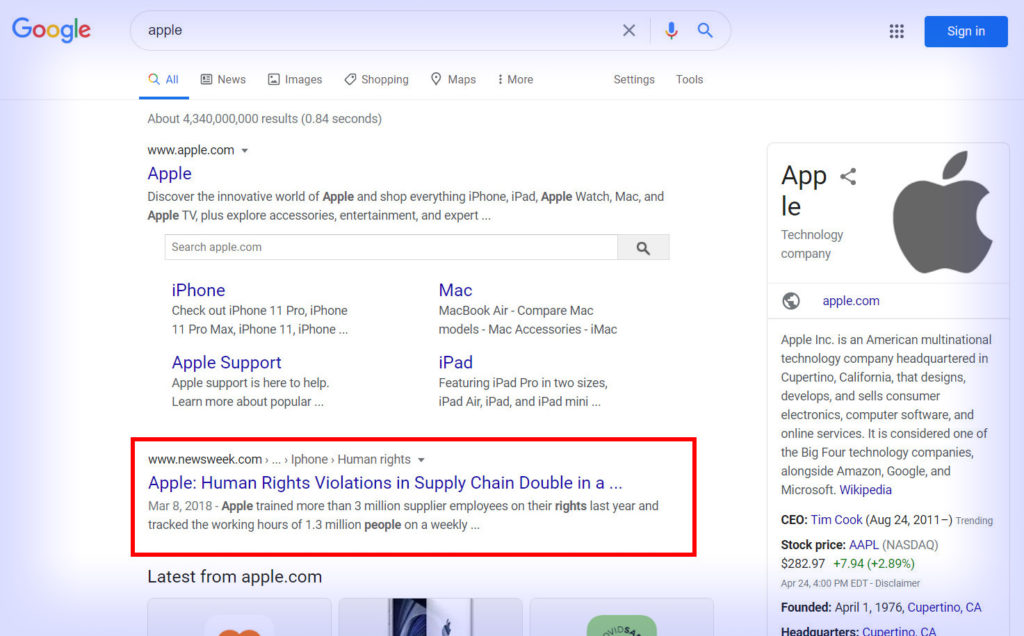
It is absolutely natural to want to completely get rid of negative materials that are showing up for one’s name search. Everyone wants to return to that innocent time prior to when the negative items started showing up. You want to get your online identity back, you want to regain the positive image about you online, and to be able to live your life freely again, without this hanging over your head.
The unfortunate truth is that most claims of removals are exaggerations or outright lies. We hate telling you this, because we hate for you to feel disappointment or hopeless, and we hate telling you that there are irresponsible and unethical people in our Online Reputation Management industry.
The great majority of cases where there is something negative posted online are situations where websites can legally refuse to remove negative content, or where those who are publishing reputation-devasting content cannot be legally compelled to take something down.
Reputation Management companies that emphasize removals are primarily trying to ruthlessly attract new clients by dangling the promise of their greatest desire. Some of these even have the word “removals” as part of their business names. They disingenuously pretend to have some secret methods that no one else has, or hint that they know how to break the rules to make it happen.
Unfortunately, there are instances where reputation repair companies have drawn naive and desparate people into illegal activites to remove content, including falsifying documents used as evidence in court, forging court orders, or hacking into websites. Obviously, getting tempted into involvement in illegal enterprises can generate additional reputation-damaging materials when the story emerges in the news (a.k.a. the “Streisand effect”). Or, when it unwinds it can result in the contents getting republished and even more solidified into the search results. In the worst cases, following the suggestions of unethical reputation management personnel can and has resulted in hefty fines and prison sentences.
You might think, “if they might be able to do it, why not?” Or, “what could it hurt if there’s a chance they can do it?” Once a client is suckered into contracting with them, they will either do something that is not in the best interests of the client, or they will waste some time and money, only to ultimately inform them that a removal is unnecessary — “so why not use their suppression service instead?”
There are indeed a number of cases where one can get damaging items completely removed.
Types of Reputation-Damaging Materials that May Be Removable:
- Defamation & Libel. With good representation, one may sue a defamer in court, and if successful, obtain a court order compelling the reputation attacker to help remove the negative contents.
- Porn Revenge. Major search engines are willing to surpress non-consensually published images and videos of a nude or pornographic nature for free. One does not need an attorney to accomplish this, but to carefully make a thorough list of all the URLs of pages where the nude or pornographic images may appear, and then submit a removal request to the search engines. Porn revenge is specifically illegal in many states, and comprehensive identification of all porn materials can be technically challenging. So, it can be helpful to have attorneys or reputation management professionals assist with porn revenge removals.
- Trademark Infringement. Some types of damaging materials could comprise a form of trademark infringement, if the defamer is attempting to profit by harming your company. Litigation can help obtain a court order that compells the infringer to desist, and to potentially pay damages.
- Mugshots & Arrest Records. In some cases, upstanding websites such as local newspapers and news sites are willing to remove mugshots and arrest records if the charges are dropped, or if the charges are handled through deferred adjudication and expunged.
- Negative Ratings & Reviews. In some situations, ratings and reviews publishers such as Yelp, Google, internet yellow pages sites, and other professional reviews sites will remove reviews if one can establish that the review contents break their terms and conditions.
- Invasion of Privacy, Doxxing, and Harassment. While these things are not precisely a reputation attack, one’s reputation can often be a component of the overall scope of issues involved. Websites, social media platforms, online forums, and the internet service providers (“ISPs”) that provide hosting of such sites are typically willing to help victims by removing the attacking materials.
Please note that even in instances where you believe your issue might qualify for one of these cases, there can be a lot of complex issues that impact whether the materials qualify or not — meaning, even if you were defamed, the material might not be addressed by organizations involved, or may still not be removed.
Common Issues Making Reputation-Impacting Content Impossibe to Delete
- Defamation and libel lawsuits must be filed within the statutes of limitations, or else the court may choose not to hear the case at all. That frequently may be a one-year limit. This and other qualifying conditions can differ from state to state.
- Statements of fact may generally not be considered to be defamation, although some states may allow one to sue even if facts are used, if they are presented in such a way as to create a misleading impression about one — the legal premise for this is called “false light”.
- Stating an opinion about a company or a person may generally be allowed to stand by courts in most instances.
- Your court case may find in your favor that you have been defamed, but if there are news stories about the lawsuit itself, those news stories may not be removable once you have won your court case.
- Litigation is costly, and often outside the reach of many individuals and small businesses. It is also frequently lengthy, typically requiring one to two years. So, relief may not be quick, and in the meantime published reputation-damaging materials can continue to be present.
- While search engines have narrowly defined Porn Revenge to apply only to images and videos, negative written materials can also be a part of a porn revenge or sextortion attack upon someone. So, while the search engines may agree to remove photos and videos, you might still have to sue to address associated written materials.
- Search engines and other types of sites that publish third-party content are not considered liable for that content, according to the Communications Decency Act, Section 230. Because of this, even if you obtain a court order, the site(s) where that material appears may decide not to do anything about it. While Google has long chosen to remove content specified by duly-executed court orders, it has sole discretion about taking action, and there are instances where it has not removed content identified in court orders.
- In some cases where the search engines have removed court-ordered content, it later reappears because the sites publishing them have intentionally made changes to circumvent Google’s actions. Also, many sites on the internet have been set up to copy and republish content from other sites, making true removal very challenging in some instances.
- We have, in rare instances, discovered that reputation-damaging content was published on the Dark Web, creating a condition whereby it can get republished indefinitely onto the regular internet over time. So, “deletion” from the visible internet is sometimes only temporary, as the materials may keep getting republished.
You can see that outside of a narrow scope, most Online Reputation Management companies can not accomplish actual “removal” or “deletion” of harmful materials.
Instead, one should focus upon positive and ethical online reputation management.
For all of these reasons, we do not promote ourselves with language that leads potential clients into unreasonable expectations. There are various effective methods that can result in outright removal (such as litigation through a reputable attorney *), but it is advisable to also perform a reputation repair campaign that will be ethical, solid and effective. That is what we offer here at iReputation Repair.
* If you need to find a reputable and effective defamation lawyer, we can help you locate one.